
FP6EU
  www.astronet-eu.org


What is ASTRONET ?

ASTRONET was created by a group of European funding agencies in order to establish a comprehensive long-term planning for the development of European astronomy. The objective of this effort is to consolidate and reinforce the world-leading position that European astronomy has attained at the beginning of this 21st century.

The success of present-day European astronomy has been built by combining previously scattered resources into multilateral partnerships, the most important of which are ESO for ground-based optical astronomy and ESA for space astronomy. Developing this concept and its impact and expand it to all domains of astronomy and all of Europe requires a shared, comprehensive Science Vision and roadmap for future infrastructures in astronomy. In parallel, the barriers which impede coordinated joint projects among countries must be identified, and ways to overcome these barriers must to be proposed and tested.

To do so, ASTRONET will cover all astrophysical objects from the Sun and Solar system to the global structure of the Universe, as well as every observing approach, in space and from the ground, and from radiation at any wavelength to astroparticles and gravitational waves. It will address the whole “food chain” from infrastructure and technology development to observation, including the Virtual Observatory, modelling, and theory. Equally importantly, ways to better coordinate the planning and execution of research programmes in astronomy among European countries will be explored and demonstrated in practice.

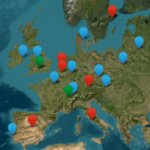
The ASTRONET consortium, which is intended to widen, has ten participants at the moment:

    • CNRS/INSU (coordinator), France,
    • BMBF and PT-DESY, Germany,
    • ESO, International,
    • INAF, Italy,
    • MICINN, Spain,
    • NOTSA,
    • NWO, the Netherlands,
    • STFC, United Kingdom,
    • NCBiR, Poland.

Sixteen Associates:

    • ESA, International,
    • MPG and DFG, Germany,
    • LAS, Lithuania,
    • SRC, Sweden,
    • GNCA,Greece,
    • HAS, Hungary,
    • ESF, Estonia,
    • SER, Switzerland,
    • FWF, Austria,
    • AI SAS, Slovak Republic,
    • CAS, Czech Republic,
    • ROSA, Romania,
    • NASU, Ukraine,
    • ARRS, Slovenia,
    • BAS, Bulgaria.

And four Forum members:

    • ISA, Israel,
    • Institute of Astronomy of the University of Latvia,
    • Academy of Finland,
    • FNU, Denmark.

Starting September 2005, 1st, ASTRONET is financed by the EC up to a level of 2.5 M€, out of a total budget of 3.2 M€. The project duration is 64 months. ASTRONET is an ERA-Net financed by the European Commission FP6 under the initiative «Integrating and Strengthening the European Research Area (ERA)».


  Latest Events
  • CONFERENCE: "Putting our Solar System in Context: Origin, Dynamical and Physical Evolution of Multiple Planet System" :

    The conference will be held April 25th to 30th, 2010 in Obergurgl (Austria). Deadline for applications: 31 January 2010. Full conference programme, including list of invited speakers, and application form accessible online from ESF website.

  • EUROPEAN TELESCOPE STRATEGY REVIEW COMMITTEE FORUM WEBSITE :

    In order to collect community input to the ongoing review of European 2-4m telescopes, a web based tool has been created. The main consultation period begins now and continues until the end of August 2009. Check the ETSRC website for more information.

  • ASTRONET JOINT CALL :

    22-09-2008: The ASTRONET Joint Call Board recommends 5 proposals for funding by the national funding agencies. Read more.

  • ASTRONET SYMPOSIUM :

    The Astronet symposium presentations are now online.

  • PUBLIC RELEASE OF THE INFRASTRUCTURE ROADMAP :

    The public release of the Infrastructure Roadmap is now available. For more information.

  • FIRST ASTRONET JOINT CALL FOR PROPOSALS :

    01-02-2008: The call ("Common Tools for Future Large sub-mm Facilities") is now closed. Read more.

  • Science Vision for European astronomy :

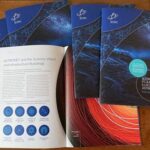
    The final report is now available in PDF format in either low (17 MB) or normal (47 MB) resolution.


Copyright 2006 Astronet All rights reserved - Contact - Legal Notice